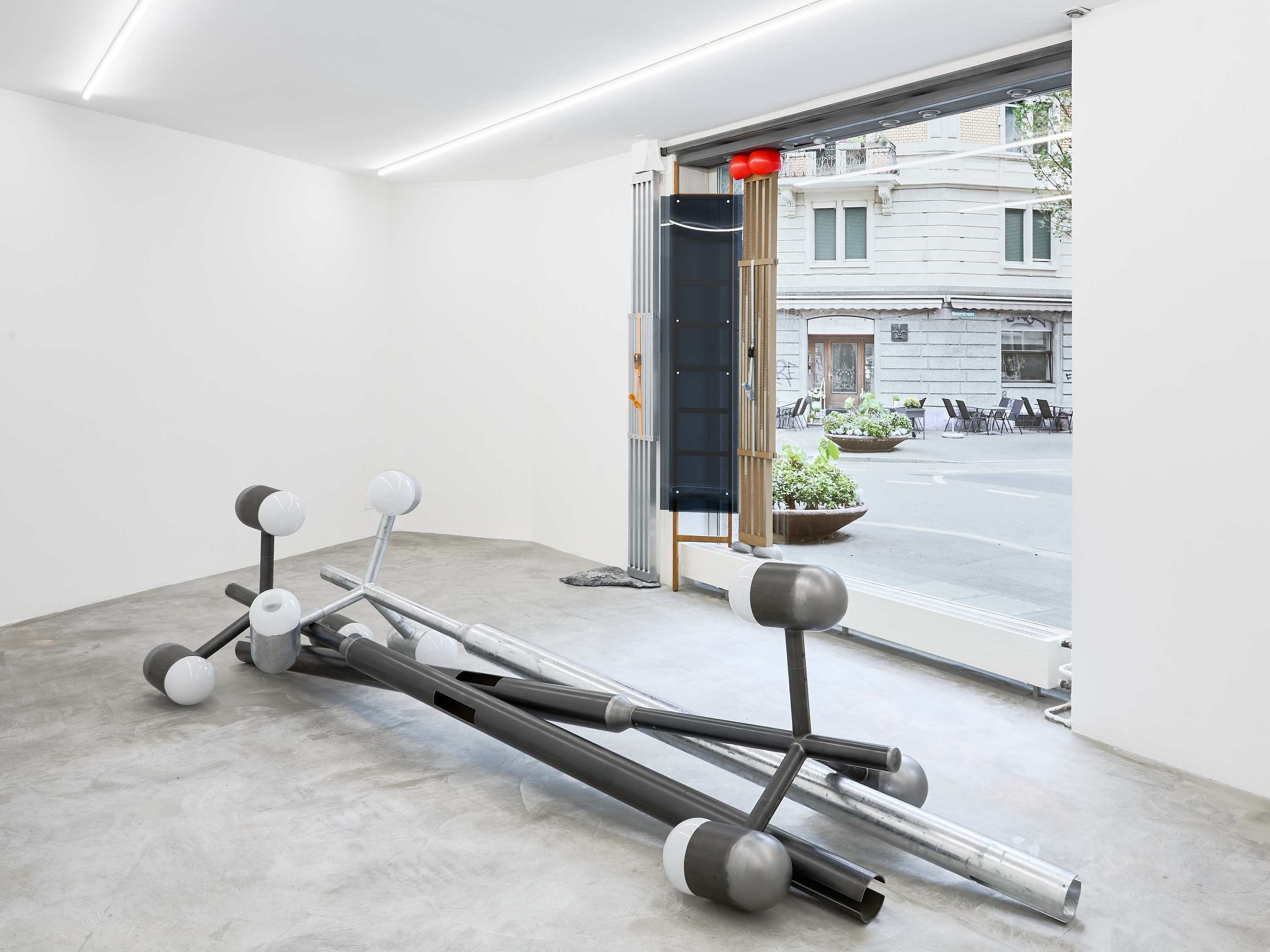
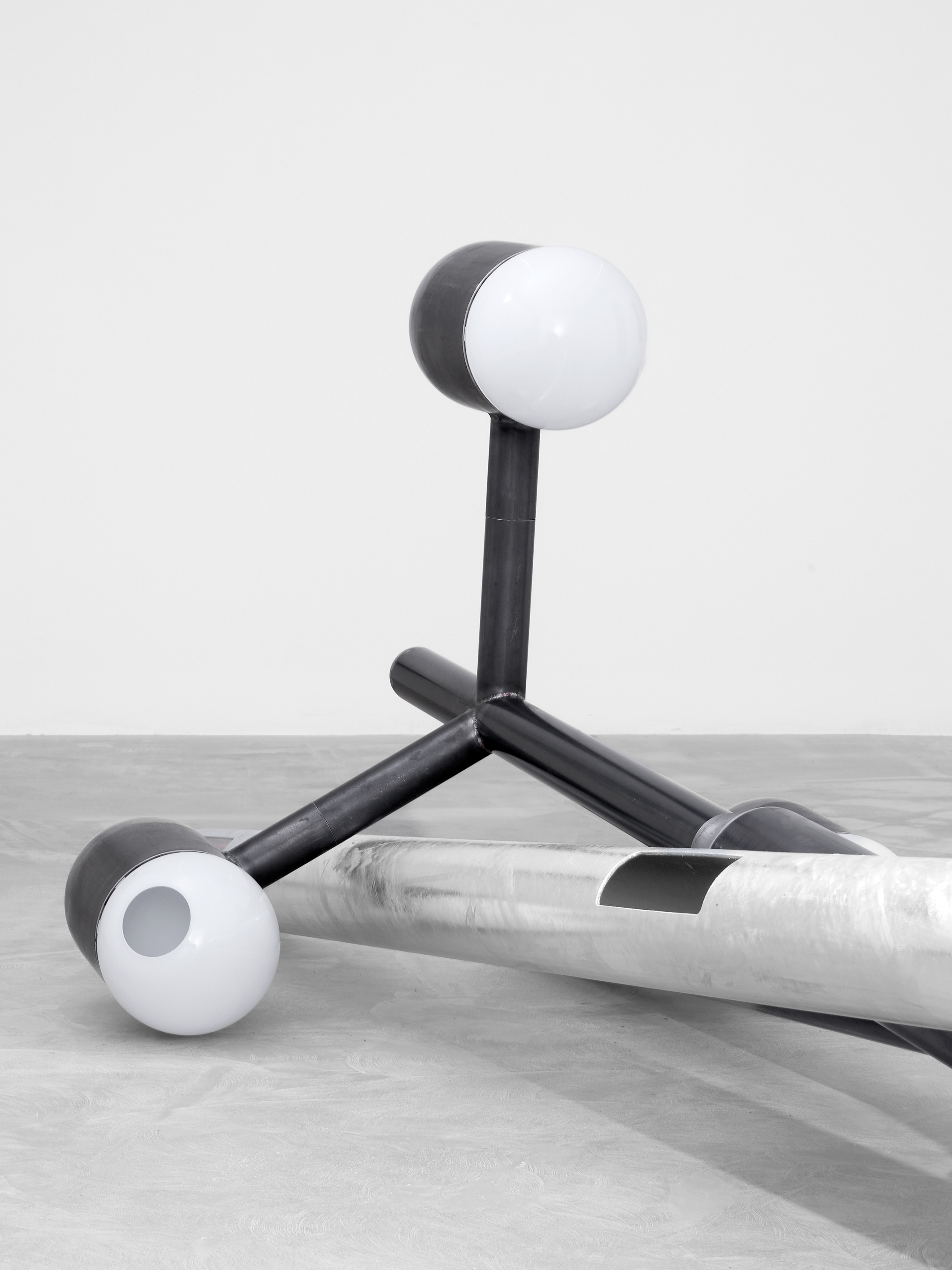
Trinity Operated, 2026
Steel, glass
100 × 405 × 115 cm
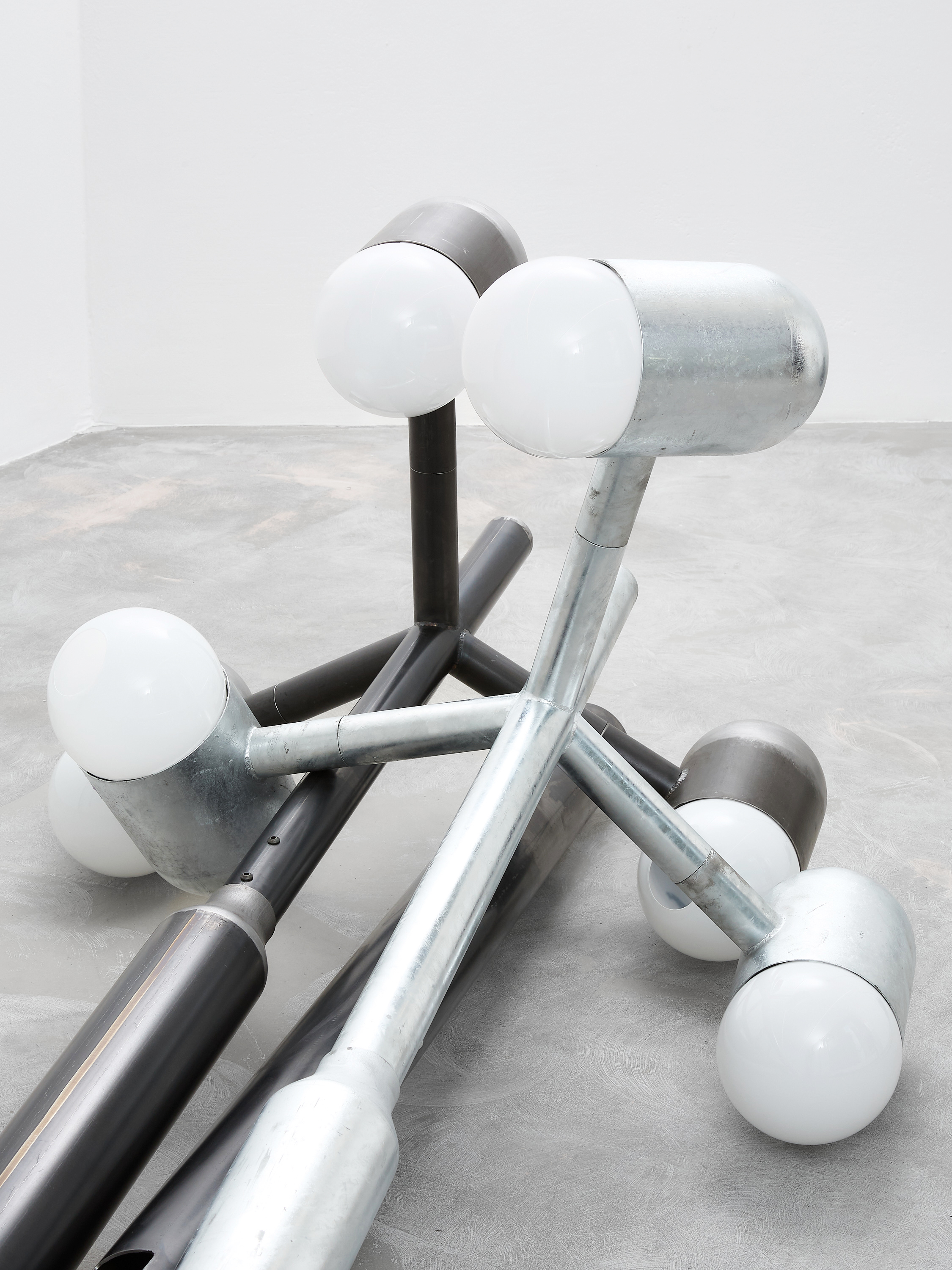
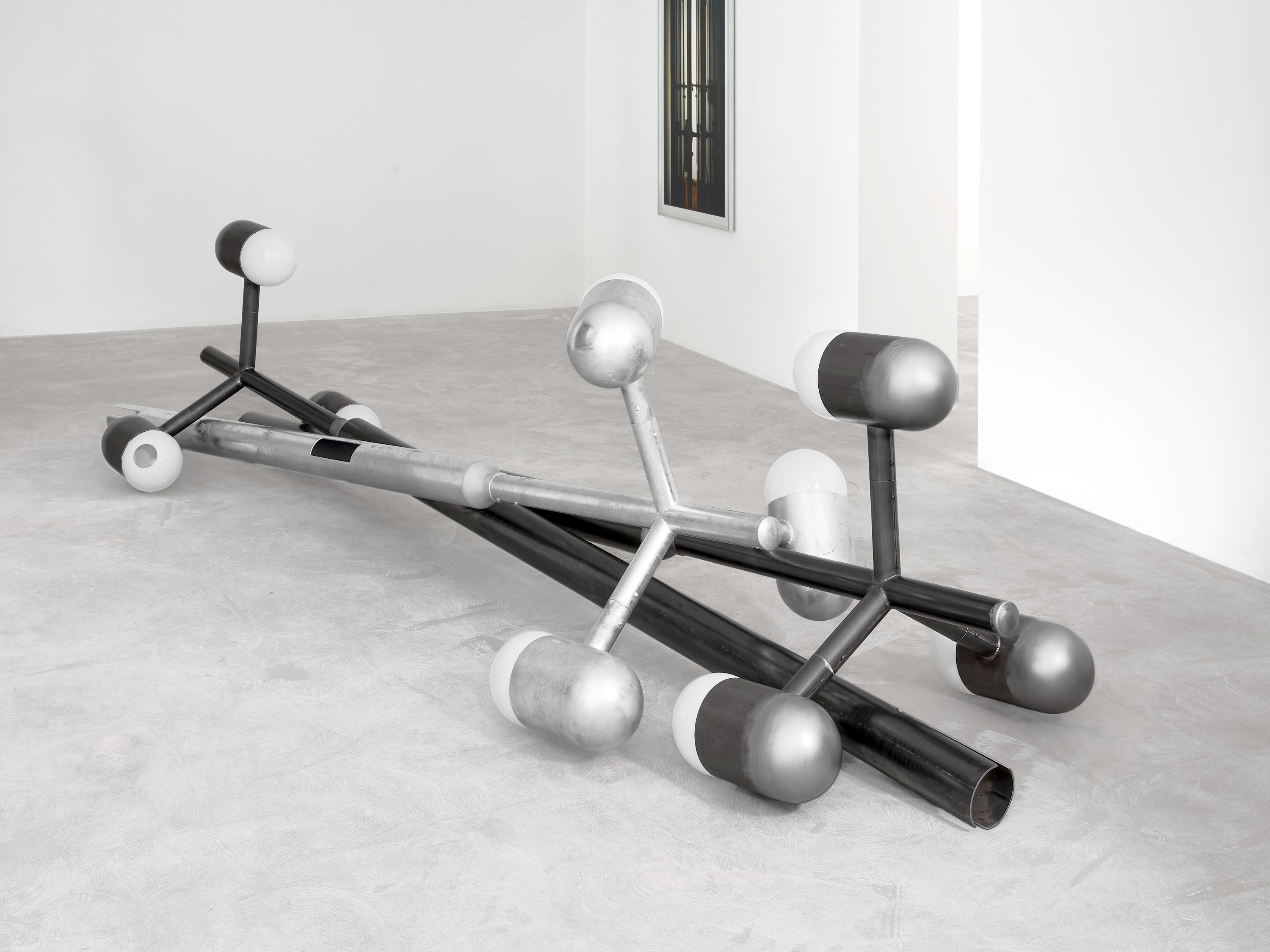
Trinity Operated, 2026
Steel, glass
100 × 405 × 115 cm
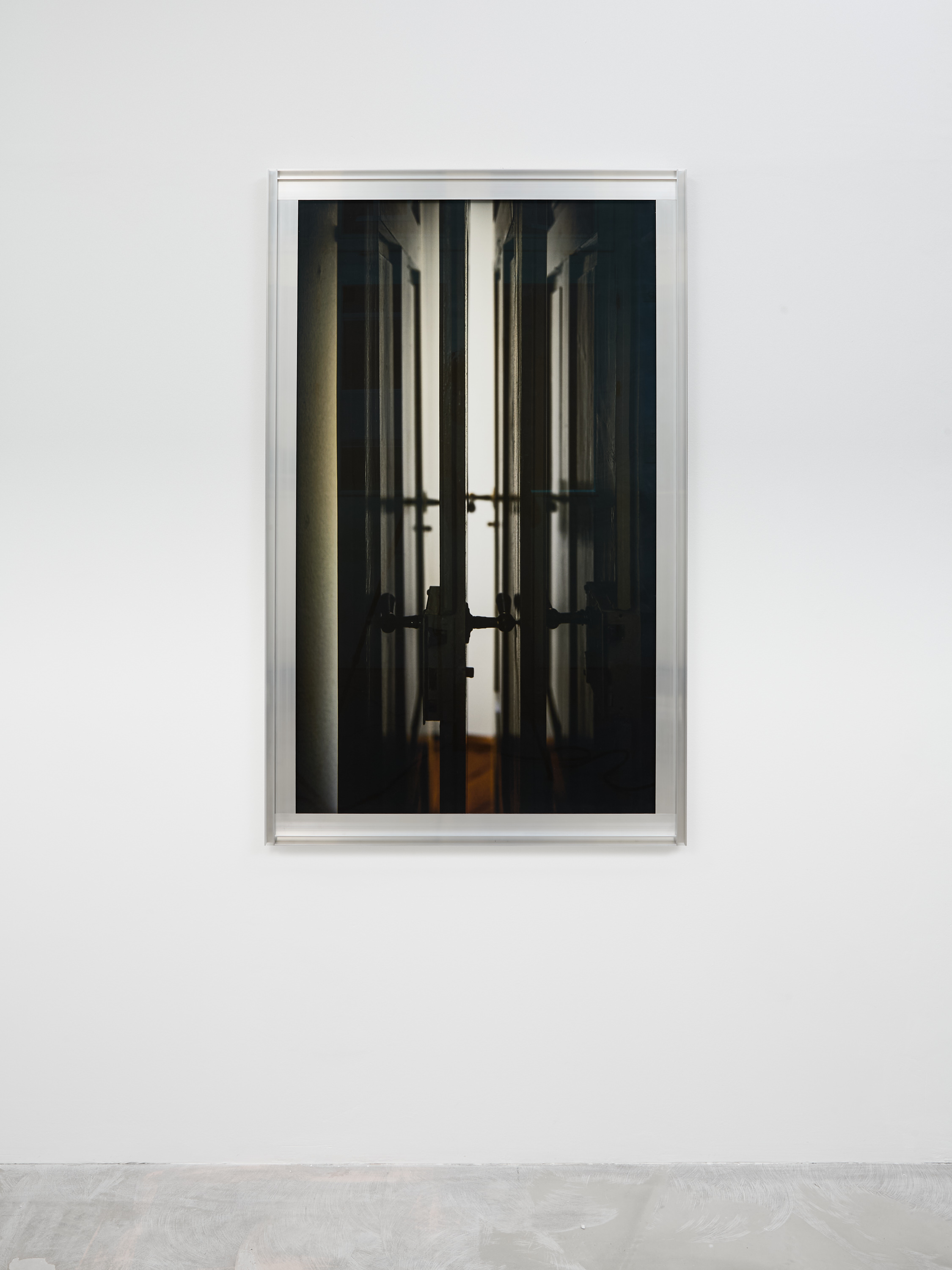
Through the Looking Door, 2019/2026
Inkjet fine art print on Canson PhotoRag 310g, aluminum artist frame,
museum glass
133 × 83 × 4 cm
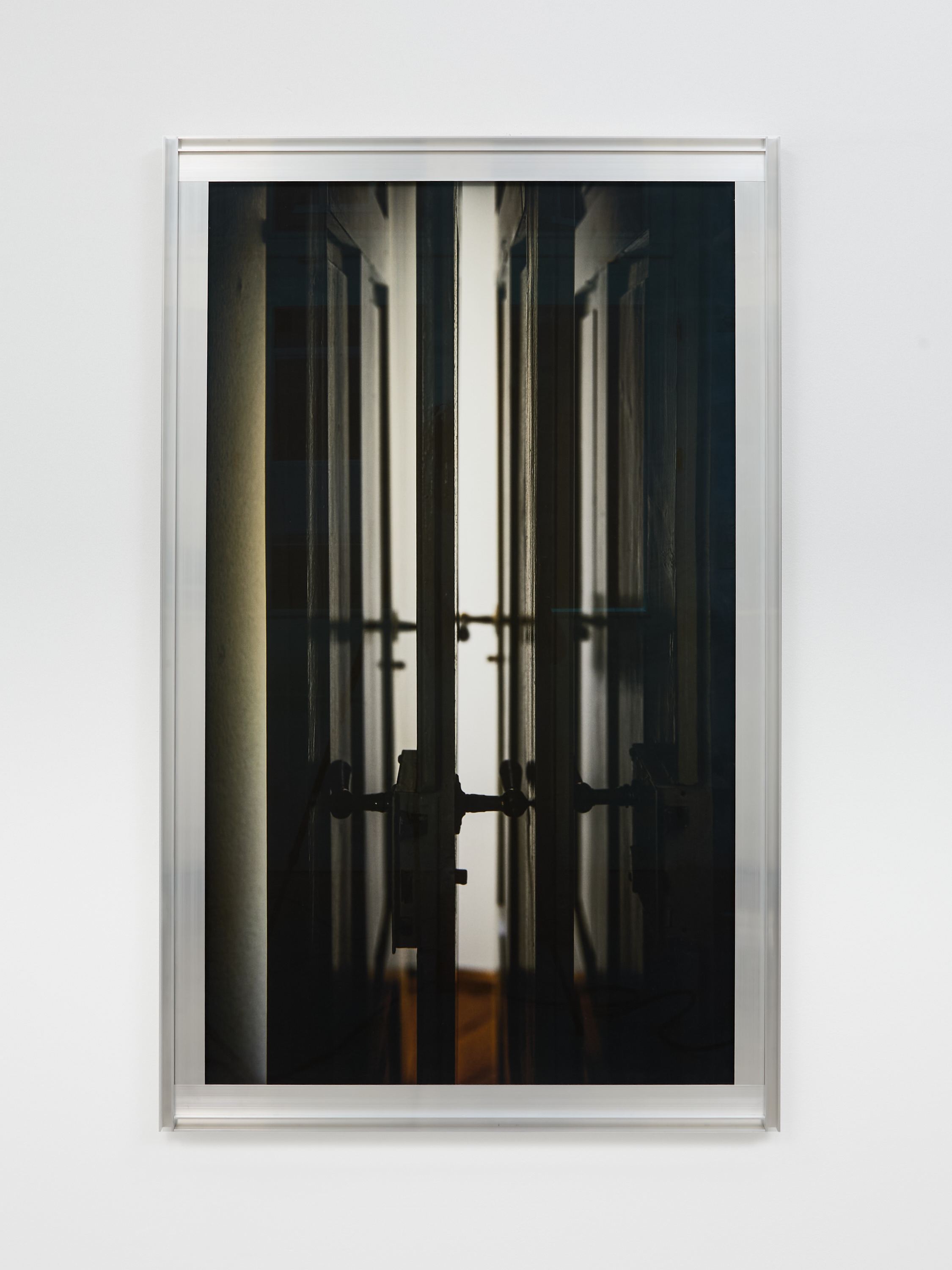
Through the Looking Door, 2019/2026
Inkjet fine art print on Canson PhotoRag 310g, aluminum artist frame,
museum glass
133 × 83 × 4 cm
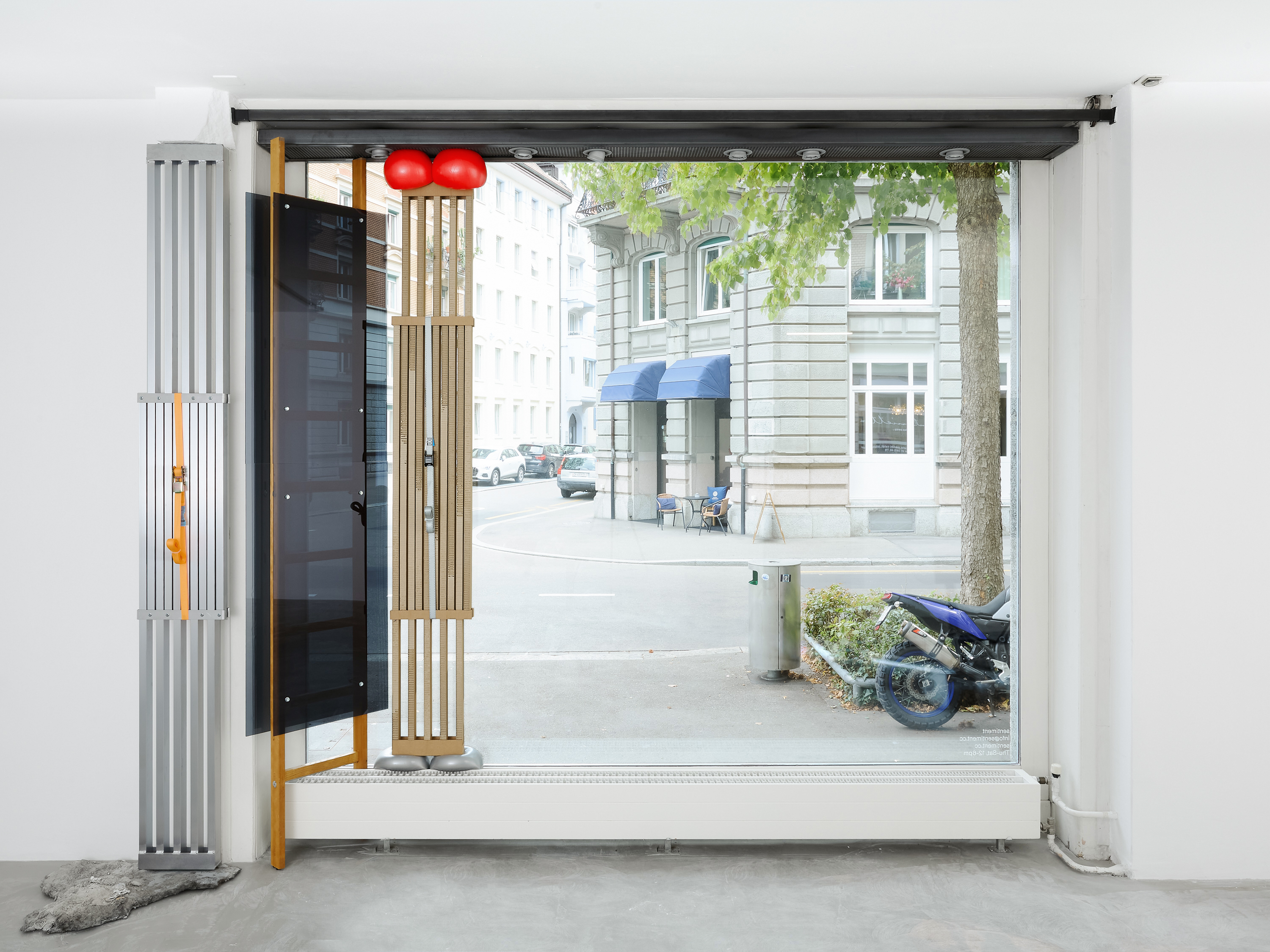
Rong News, 2026
Aluminium, concrete puddle, cardbord, gymnastic balls, wooden ladder, plexiglass
270 × 120 × 40 cm (variable)
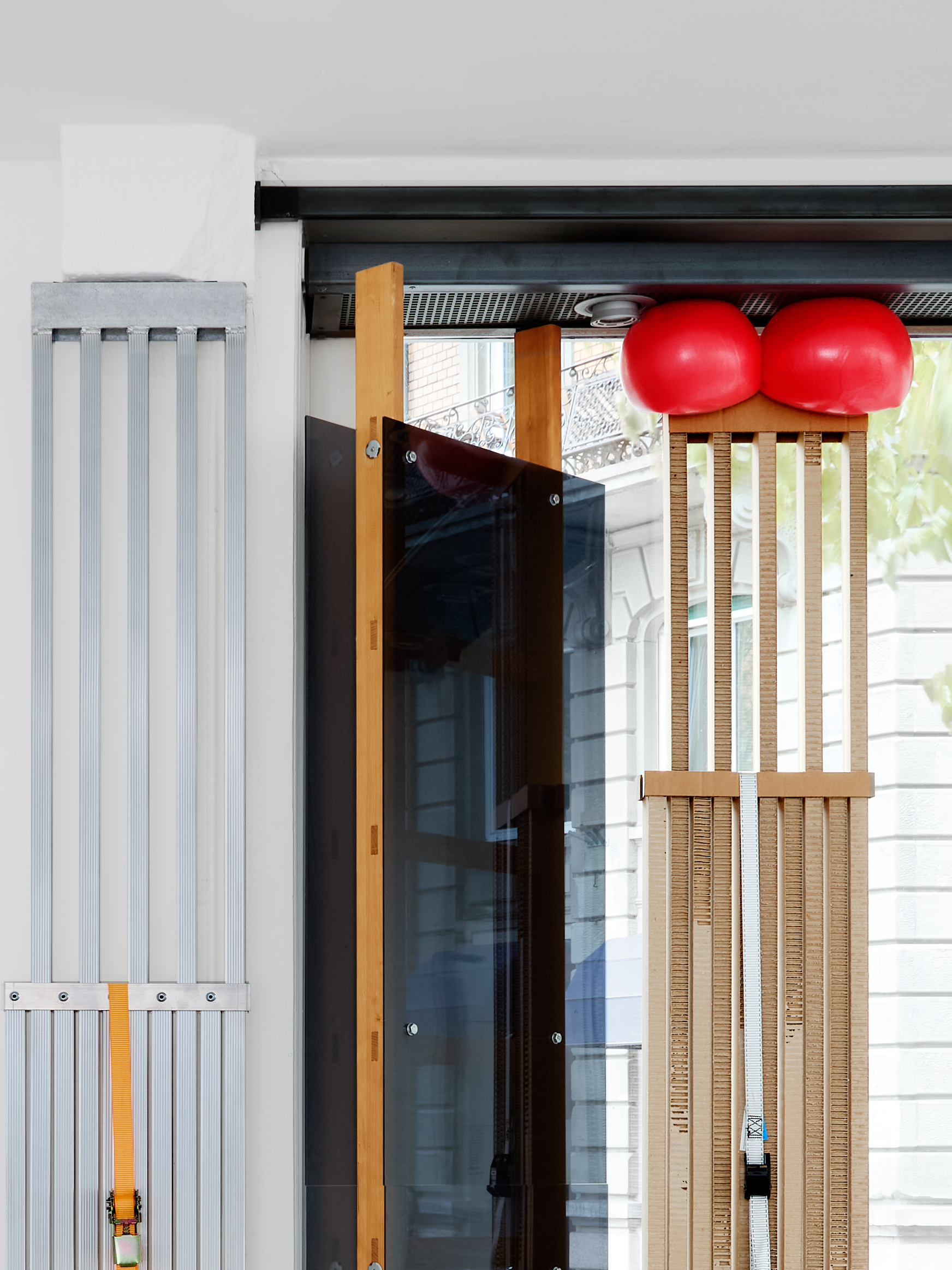
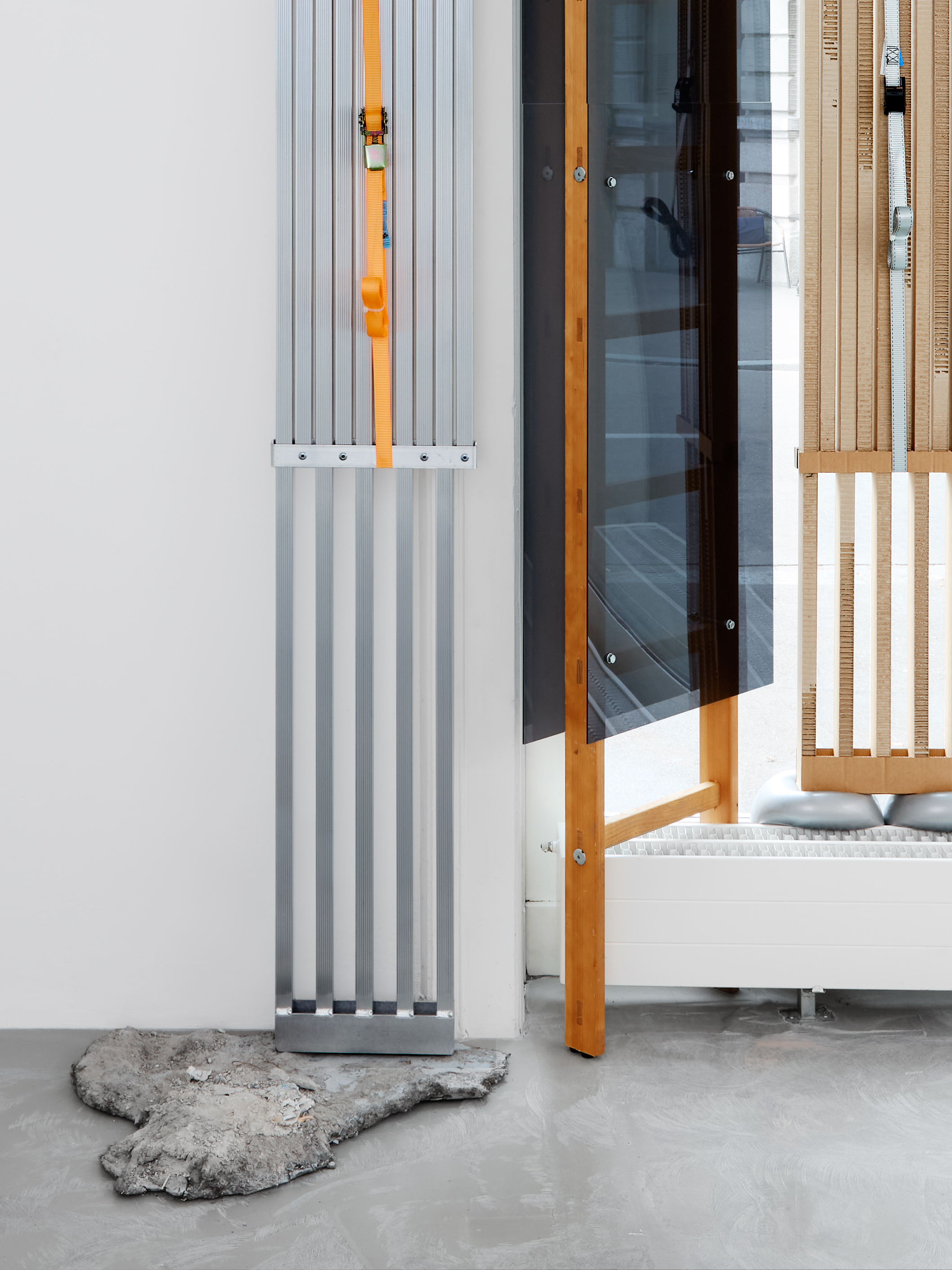
Rong News, 2026
Aluminium, concrete puddle, cardbord, gymnastic balls, wooden ladder, plexiglass
270 × 120 × 40 cm (variable)
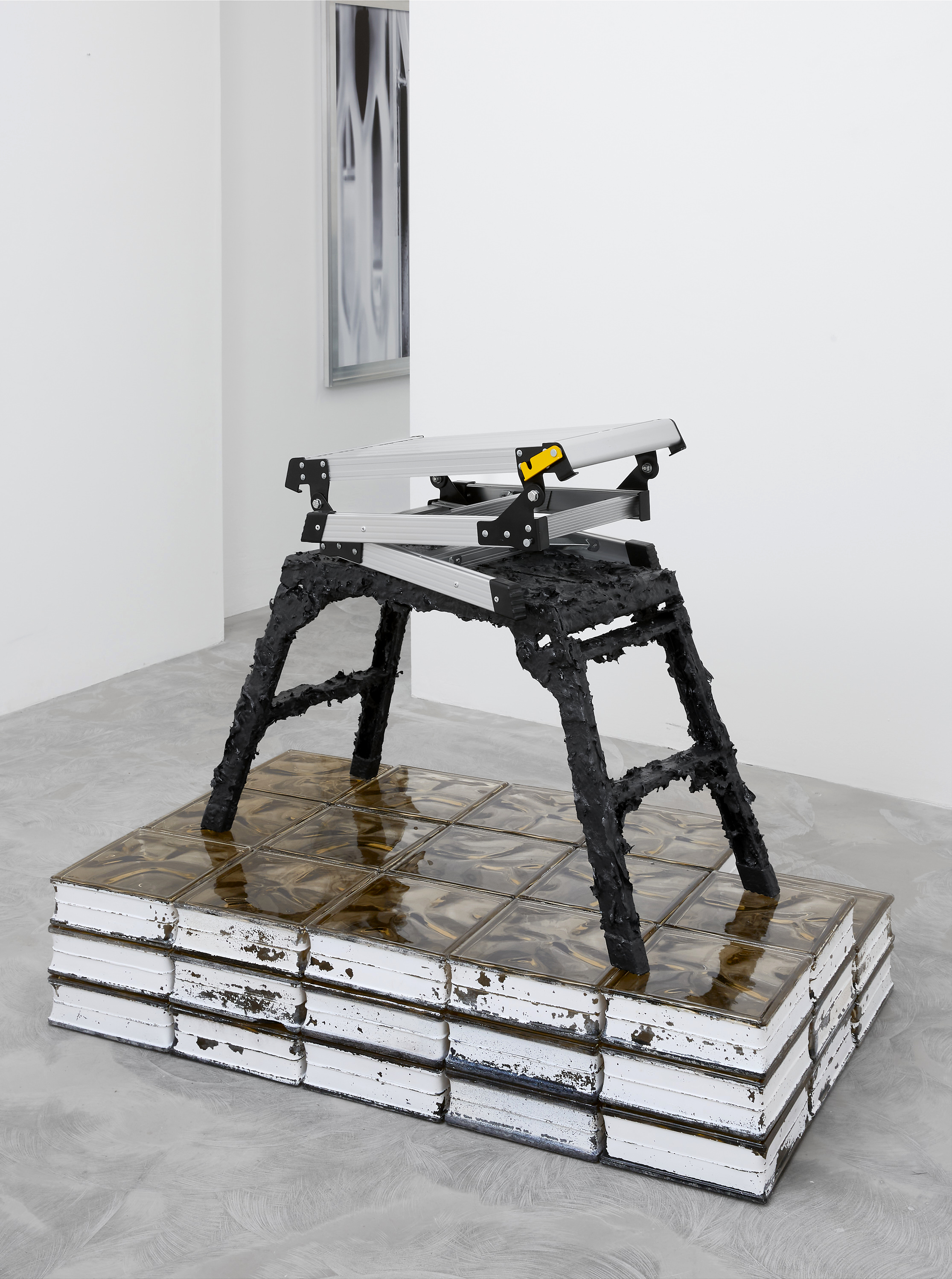
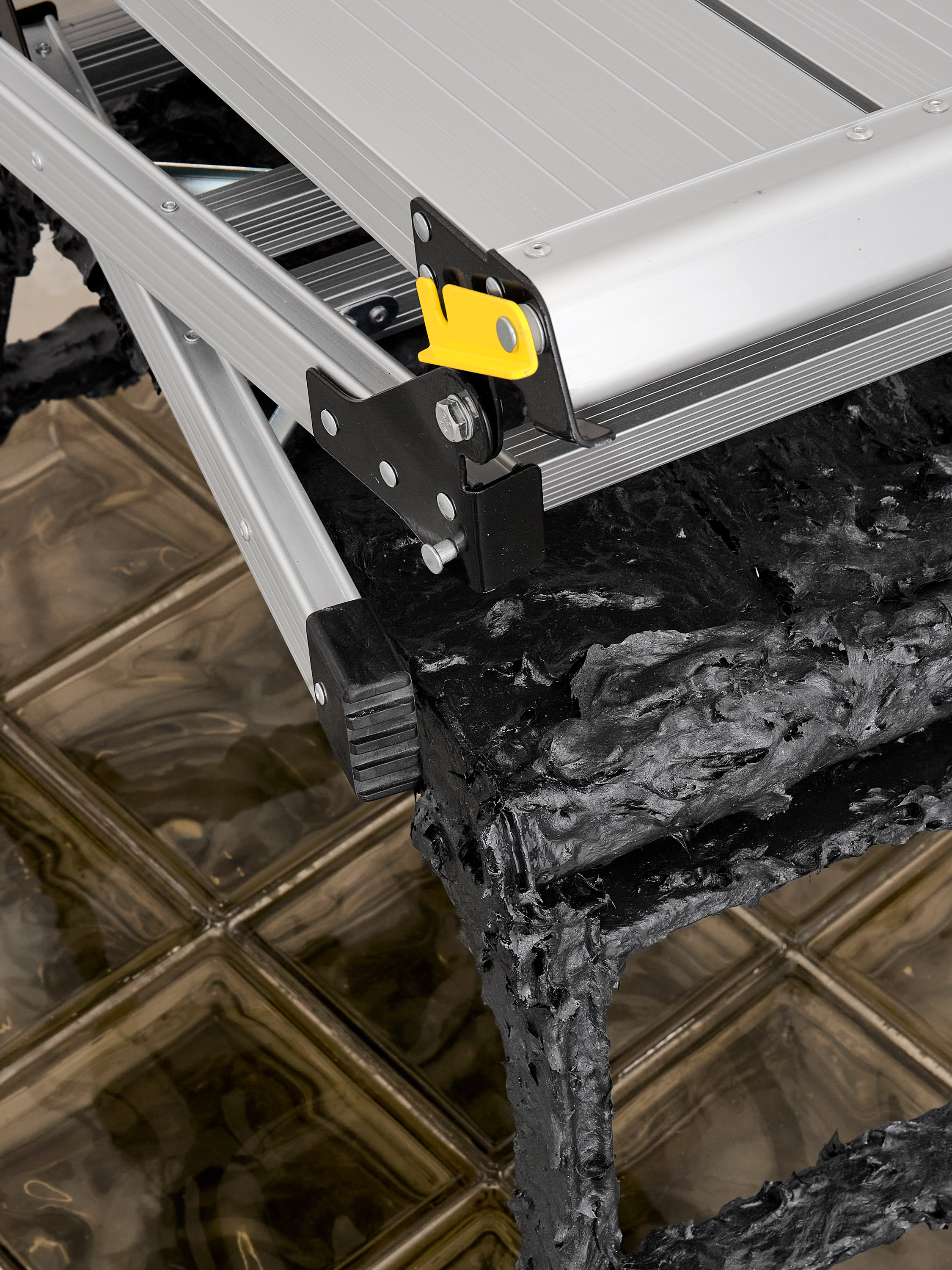
Higher Ground, 2026
Aluminium, stealth coating, glass
100 × 120 × 72 cm
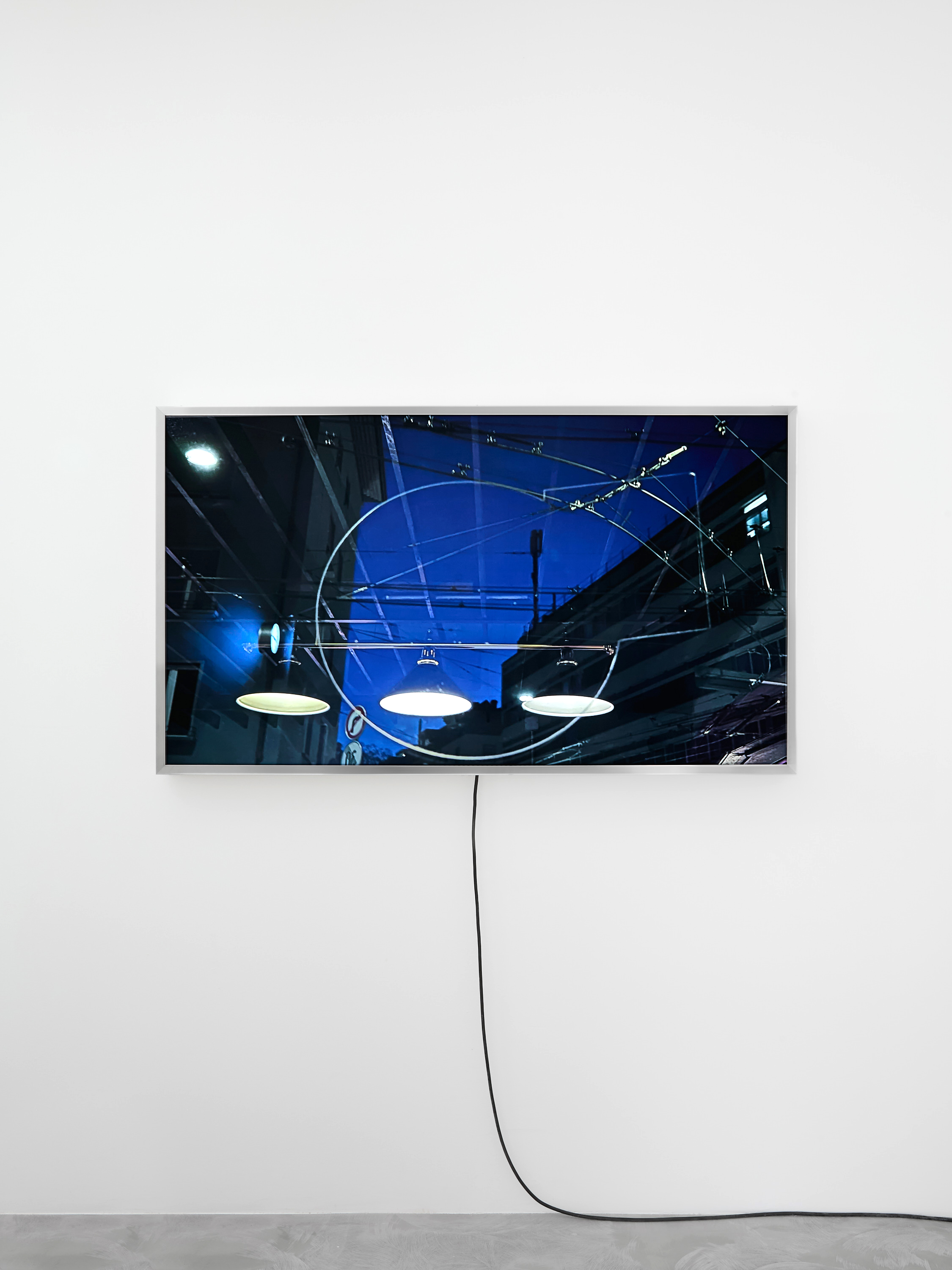
Glass City, 2026
Backlit print in a lightbox
77 × 134 × 8.5 cm
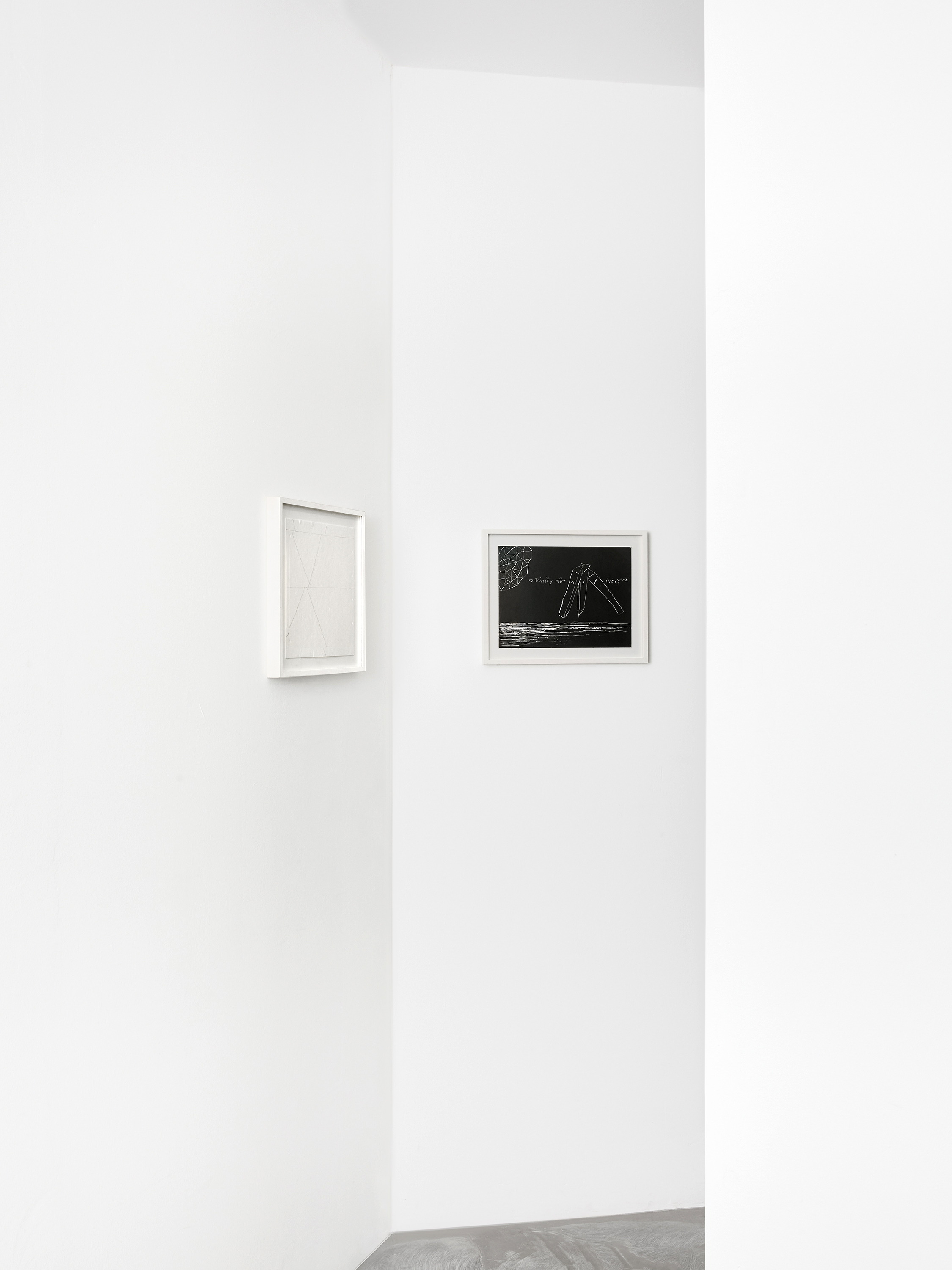
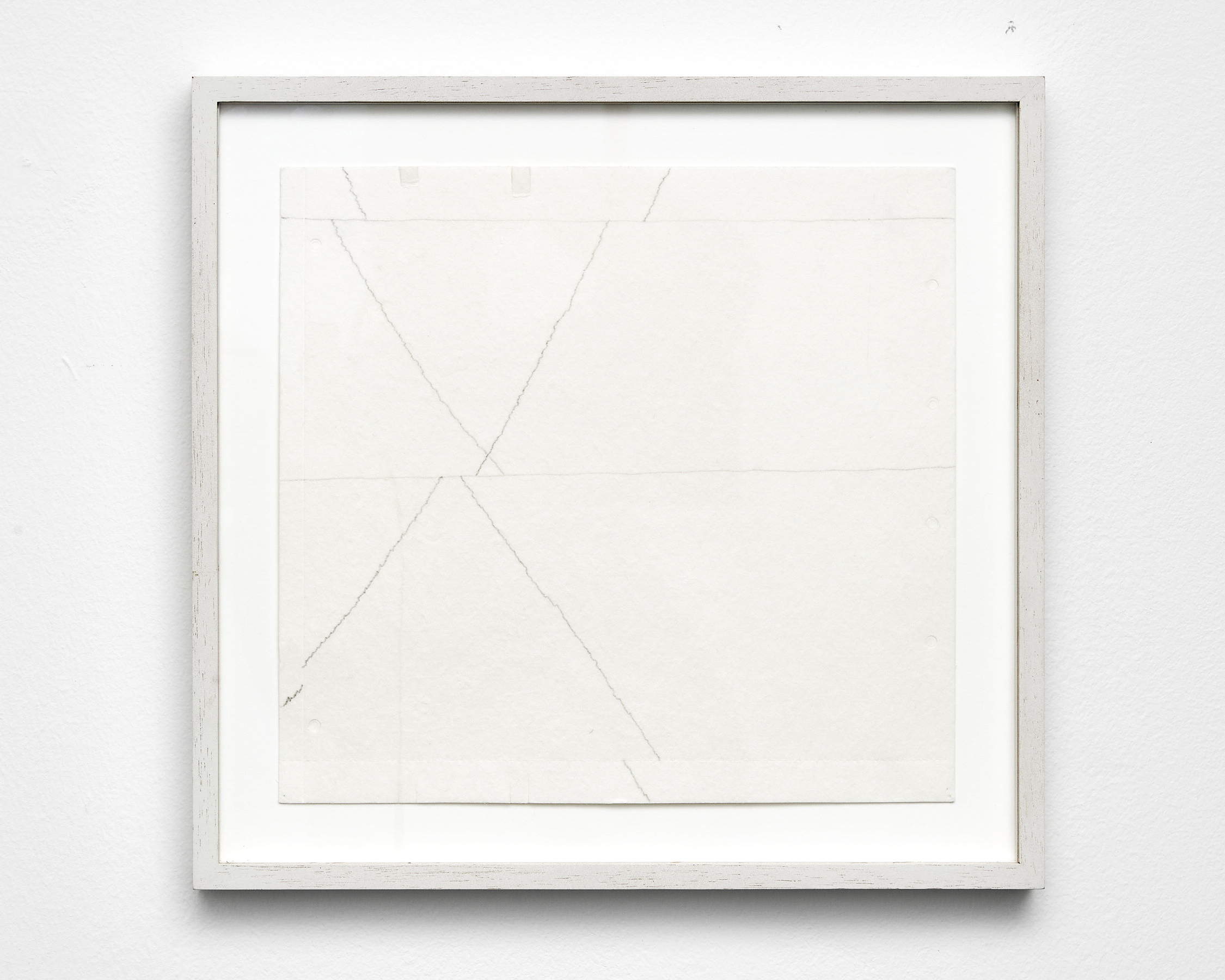
Untitled, 2009
Pencil on perforated blotting paper for radiators
34.7 × 36.5 × 3 cm (framed) / 27 × 29 cm
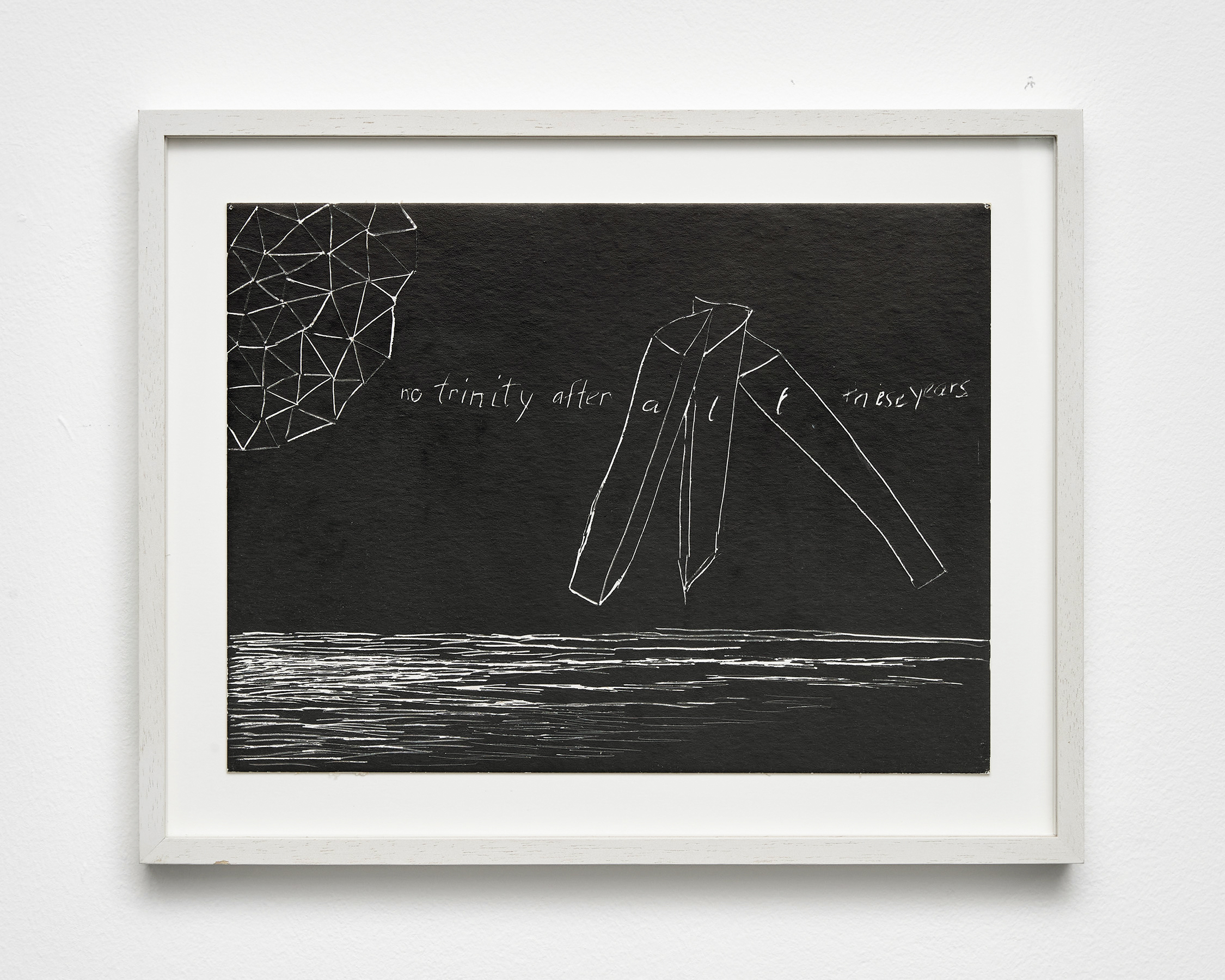
No Trinity after all these Years, 2008
Scratched drawing on black cardbord,
31.5 × 39.5 × 3 cm (framed)/ 23.5 × 32 cm
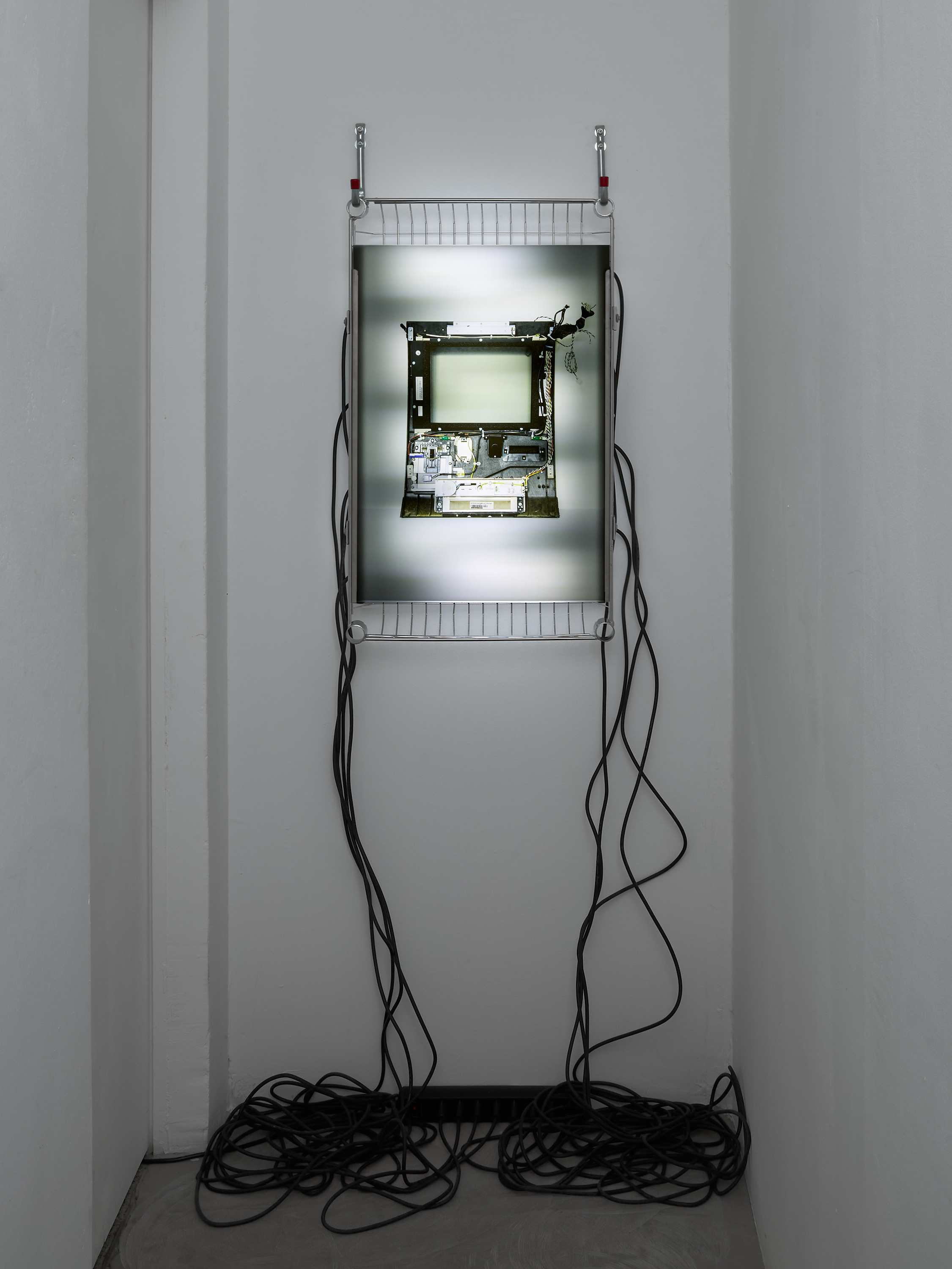
Rear Window Wired, 2019/2026
Backlit print in artist lightbox, acrylic, steel, working lights, metal basket, metal
hooks, electric cables
90 × 45 × 11 cm
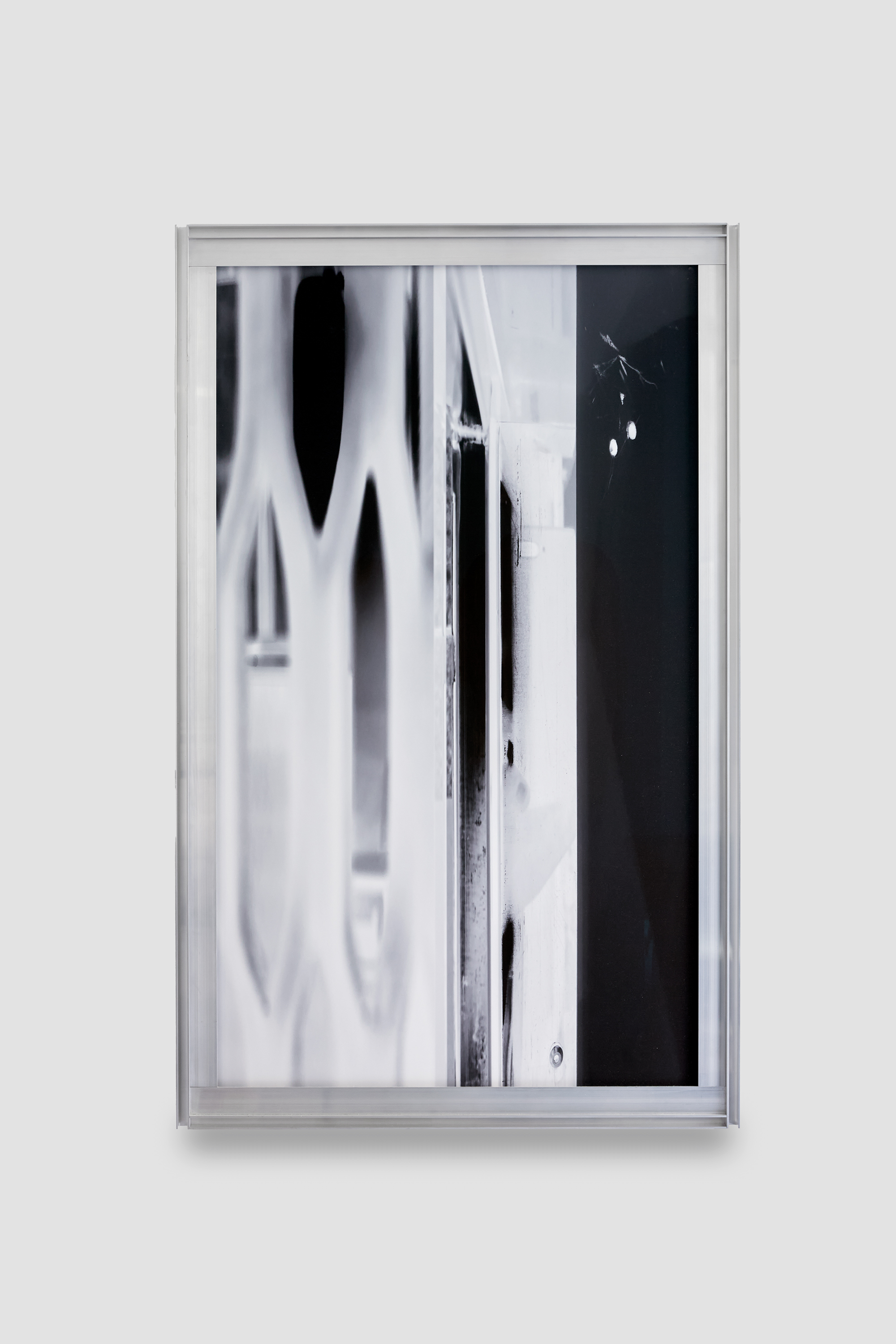
The Unseen Witnessed, 2022/2026
Inkjet fine art print on Canson PhotoRag 310g, aluminum artist frame,
museum glass
133 × 83 × 4 cm
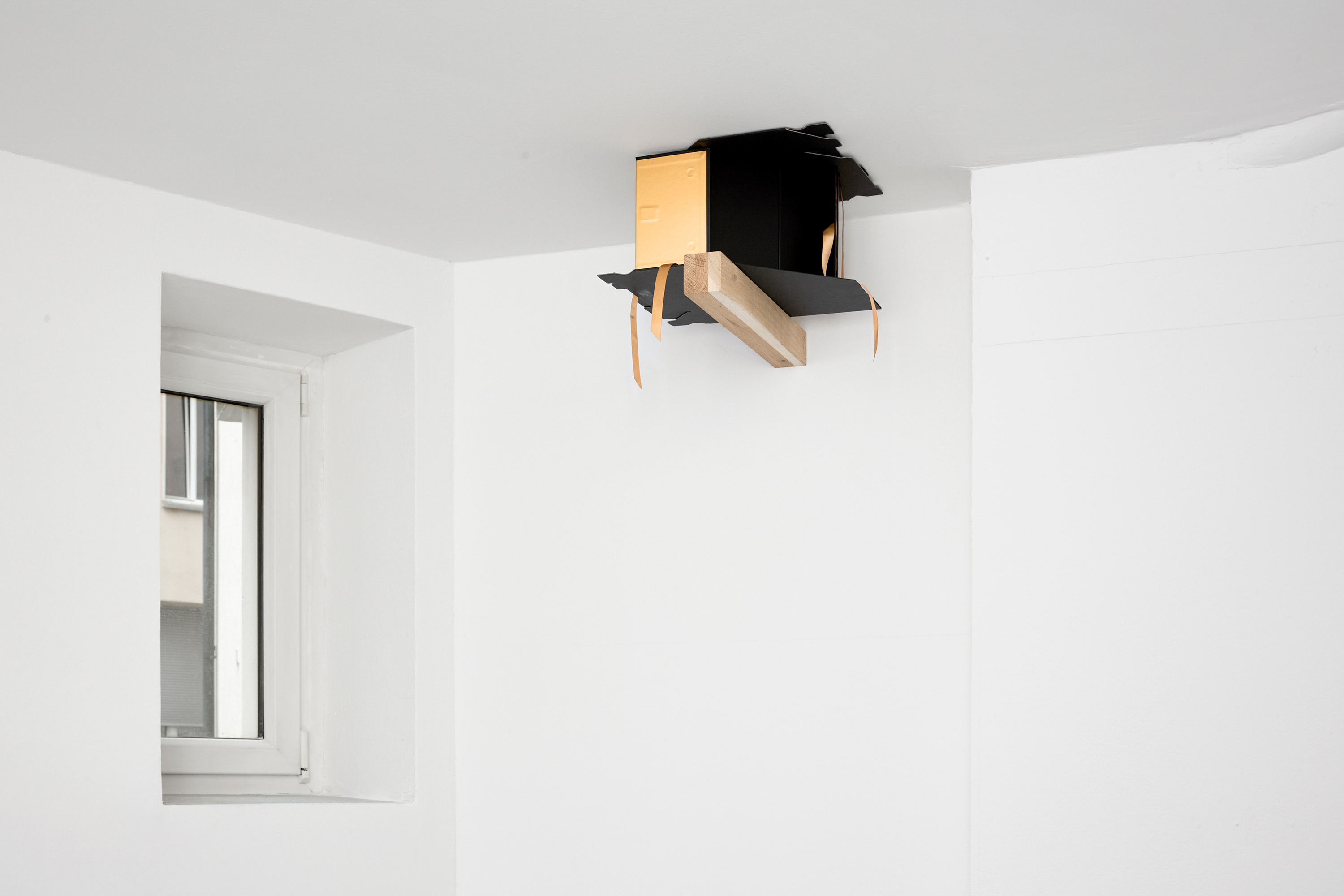
Archival House, 2026
Cardboard, wood, ribbons
30 × 50 × 37 cm
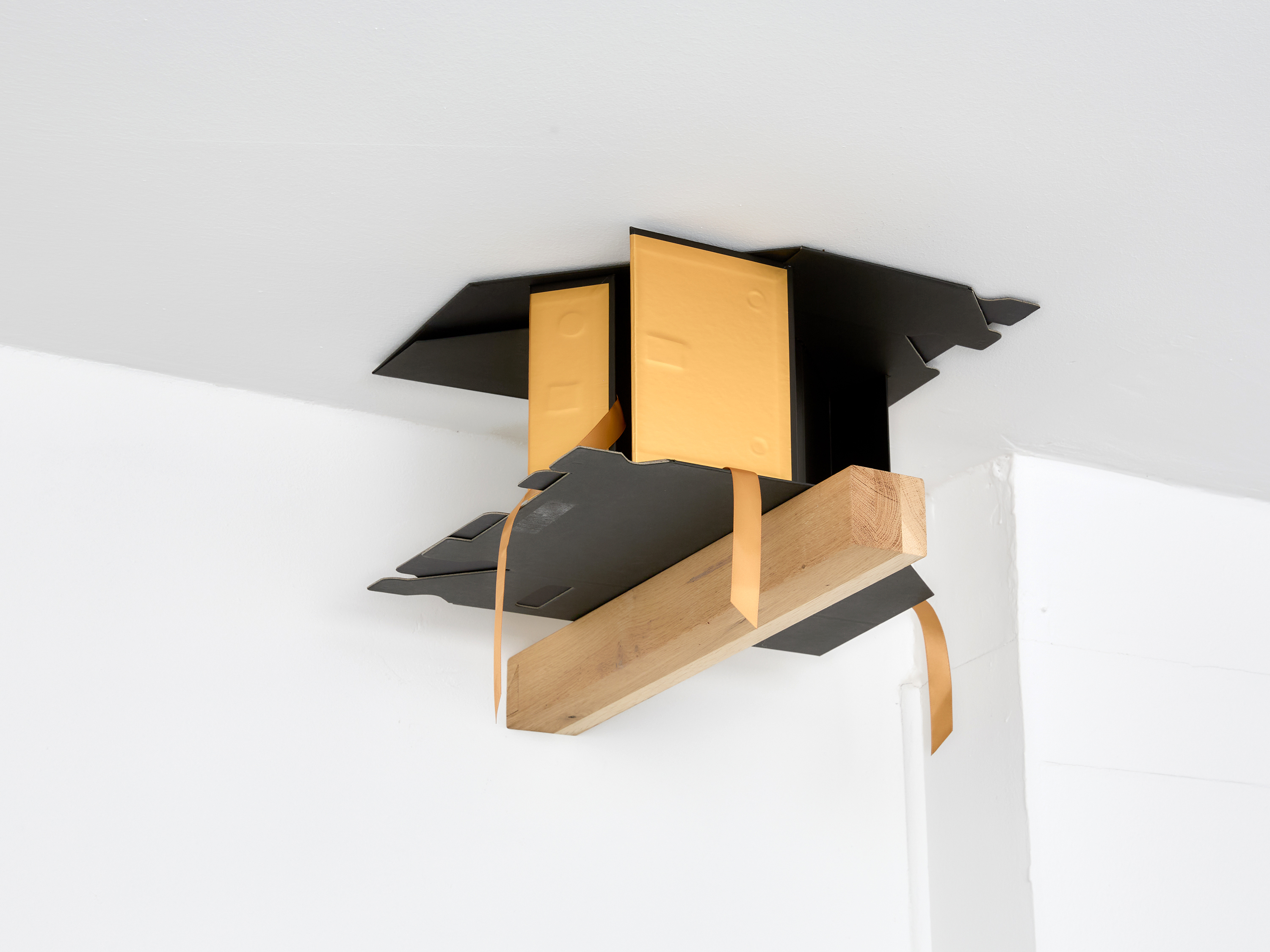
Archival House, 2026
Cardboard, wood, ribbons
30 × 50 × 37 cm
Courtesy of the artist and sentiment
Trinity Operated (2026), for instance, is a lordly, drowsing presence consisting of three three-armed steel mast lamps, reproduced from a 1950s original design and stacked horizontally in alternate directions. Being brand new replicas, one might say these industrial lamps are in psychoanalytic terms, objects free from conditioning. Not yet having acquired the sediment of a prescribed function, they remain suspended in a field of chaotic prospects, before convention closes the game down. The artwork is in itself non-working, dormant precisely. A possibly purposeless object, interconnected in a system of tripartite (electrical) relationships that cannot be disclosed. Doesn’t the title itself refer to one of the biggest mysteries of all time, surely? With a touch of irony, an eternal light is immortalised in the urban scene of Glass City (2026), where three lit lamps appear reflected in a window, tangled among electric street-wires, building façades and scratches on the glass. Here, inside, outside and surface collapse onto a single plane. A trinity quite literally folding into one.
Another directional alteration is to be found in the work hinted at in my opening paragraph—Rong News (2026)—where an aluminium plank, designed to be mounted between two ladders and used as a walking platform, is instead placed vertically in an otherwise blank corner of the space. On the adjacent window sits its cardboard replica of unthinkable utility. The two linked by a ladder, itself sandwiched between dark plexiglas panels altering sight. In Ruegg’s hands, objects seem to possess possibilities beyond their intended functions. It is not a question of copy and original, but of the object’s refusal to be exhausted by the uses we assign to it. A question that speculative realists would particularly appreciate: let’s just think of Graham Harman’s Object-Oriented Ontology anti-correlationist insistence that objects are never fully reducible to how they appear to, or function for, a perceiving subject. The cardboard double fails to capture the plank no more, and no less, than the aluminium original does. Both versions retain something withdrawn and inaccessible—a mystery that remains tantalisingly within reach, and that Ruegg makes almost palpable through simple gestures such as a change of placement, or by letting irony express that sheer simplicity of fate that can so astonish us. This is also what is encoded in the error retained within the title of this artwork, inherited from the most perfect typographical mistake ever made, in the dadaist magazine Rongwrong.
The show includes older works as well, some revisited for the occasion. Through the Looking Doors (2019/2026) is a photograph whose origins are to be found in an intervention that Ruegg did in a Zurich apartment building in 2018. Back then, she negotiated with the residents to temporarily remove the doors from their apartments and relocate these as a stack, sideways, into a corridor on the ground floor. The paradox lies in the fact that, technically, the doors are not really deprived of their original function, but this is actualised in a senseless configuration resulting in a passage obstructed by the very objects designed to regulate it. The photograph condenses the whole into an image of uncanny notes, where the familiar objects generate an impossible space, claustrophobic and airy at the same time, as a grayish eerie light finds its way among a labyrinth of shadowy silhouettes. Elsewhere in the space, a passage grows just as dense, though this time it is cables that clog. In Rear Window Wired (2019/2026) the image of the backside of an ATM is displayed in a lightbox that has itself been turned inside out, its own cables spilling into the gallery corridor. Here too there’s light. Sarcastic, it shows us the sacred glow of finance.
These are, of course, just my interpretations. Threads that I have fun unravelling from one work to the next. The visitors too are given the chance to become active, piecing together connections and thoughts. It is not a matter of discovering meaning, but of exercising imagination, until the artworks begin to form temporary constellations. A creative exercise that inevitably unveils something about the shifting nature of the reality around us—seemingly solid, yet ever changing. This feels particularly pertinent within the contemporary post-truth condition, in which reality is increasingly mediated and manipulated through digital technologies and competing narratives. If what we are told to perceive, to see as real, is (and can be) continuously reshaped and reframed, then learning to imagine otherwise becomes a form of agency. We must remain capable of participating in how reality is made. I believe Higher Ground (2026) can offer some food for thoughts here. A working stool is coated in black stealth, advanced composite designed to minimise an object’s visibility to radar, infrared, acoustic and visual detection systems, making it undetectable. On top of this, its folded counterpart remains bare and pristine. Beyond the military applications of stealth, which could open an entirely different set of considerations, I want to focus here on what happens to the object itself. The coating still looks wet, dripping substance mid-transformation. There is something strangely primordial, darkly cosmic and uncanny again, as the thick black matter seems to swallow the stool entirely, turning a functional artefact into something at the verge formlessness, bringing it back to malleability. It’s as though the stool was reverting to its genesis, before the very idea of a stool came to be at all. Is this it? The moment when the puzzle comes undone, back to its original chaos? Stealing Ruegg’s own words: “if there is meaning it flickers in the gaps.”
– Caterina Avataneo
Ilona Ruegg (b. 1949, Rapperswil, Switzerland) is a visual artist working across sculpture, installation, and photography. Her practice engages with architecture, display, and systems of representation, often employing serial structures and modular forms to explore spatial perception and the conditions of exhibition-making. Through precise, reduced interventions, her work examines the relationship between object, image, and environment.
Over the course of her career, she has received several prestigious honors, including the Prix Meret Oppenheim (2001), the Recognition Prize of the Kulturstiftung UBS (2004 and 2013), and the Prix Visarte for Art and Architecture (2023). Earlier on, she was awarded the Louise Aeschlimann Scholarship and a residency at the Istituto Svizzero in Rome, both in 1984.
Ruegg’s work has been presented in numerous important institutions, including the Swiss Institute in New York, Kunsthalle Bern, Musée cantonal des Beaux-Arts Lausanne, Kunsthalle Arbon, Kunsthaus Zürich, Museum Haus Konstruktiv in Zurich, Kunstmuseum St. Gallen, Shedhalle Rote Fabrik in Zurich, and Aargauer Kunsthaus, among others. Her works are held in major public and private collections.